
Thoracic Surgery Newsletter — March 2026
June 19, 2026Thoracic Surgery Newsletter — August 2026

Letter from the Chief
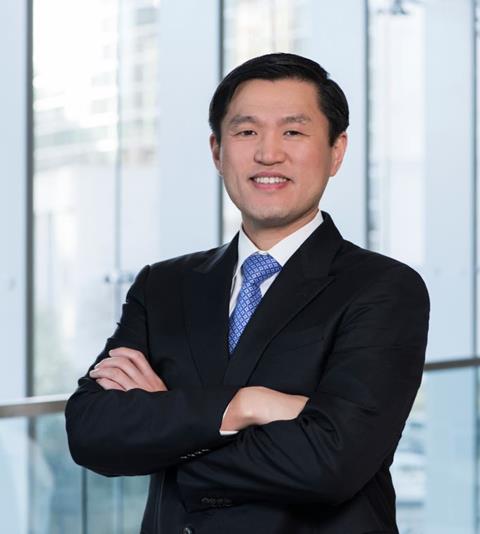
Min P. Kim, MD, FACS One of the greatest privileges of working in academic surgery is the opportunity to educate the next generation. As I reflect on the activities highlighted in this newsletter, I am reminded that surgical education does not begin on the first day of residency. The journey often begins many years earlier. This summer, our Thoracic Surgery service had the opportunity to work with learners at nearly every stage of that journey—from high school and college students experiencing medicine for the first time, to medical students and residents developing their clinical skills, to fellows completing the final stages of It is exciting to watch that progression. A high school student walks into the operating room for the first time and begins to imagine what it might be like to become a physician. A college student spends time in clinic and discovers that surgery involves much more than operating. A resident gradually develops the knowledge, judgment, technical skills, and confidence required to care for increasingly complex patients. Finally, a fellow graduates ready to assume the responsibility of being an independent surgeon. Being able to participate in that entire journey is incredibly rewarding.
We often focus on teaching surgical technique, but training a surgeon requires much more. We must teach our trainees how to think, how to make difficult decisions, how to communicate with patients and families, how to work as part of a team, and how to recognize when an operation is—or is not—the right treatment. We must also encourage curiosity, research, and innovation so that the next generation continues to improve the care we provide. As I get older, this mission has become even more personal. The students, residents, and fellows we are training today are the physicians and surgeons who will someday be That responsibility is both humbling and motivating. Every hour spent teaching in the clinic, at the bedside, in the operating room, or discussing a research project is an investment in the future of medicine. Our responsibility is not simply to train surgeons who can perform an operation. It is to develop thoughtful, compassionate, technically excellent surgeons who will take care of their patients as we would want someone to take care of our own families. I am grateful to our faculty, residents, fellows, Perhaps the greatest measure of an academic surgical program is not only the patients we care for today, but also the surgeons we prepare to care for the patients of tomorrow. It is a privilege to be part of their journey—and I look forward to the day when they are taking care of all of us. Min P. Kim, MD, FACS
A Summer in Thoracic Surgery: William Liang
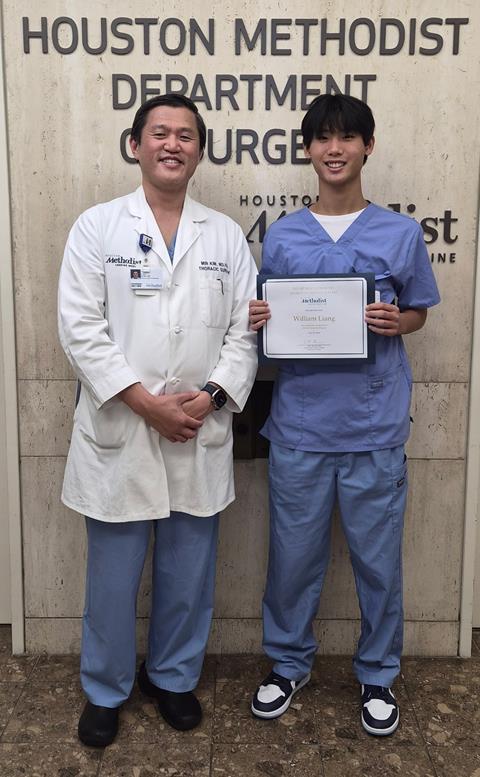
Dr. Min Kim and William Liang This summer, the Houston Methodist Thoracic Surgery service had the pleasure of welcoming William Liang, a rising senior at St. John’s School, for a four-week internship. William joined us through the St. John’s School Summer Internship Program, which was established to give students firsthand experience in professional settings, introduce them to potential careers, and connect them with mentors in their fields of interest. For four weeks, William became part of our Thoracic Surgery team and had a unique opportunity to experience what it is like to pursue a career in medicine. He spent time in the hospital
At this stage in his education, the goal was not simply to teach William about thoracic surgery, but to introduce him to what it means to be a physician. He observed that becoming a surgeon requires much more than technical skill. It requires curiosity, compassion, professionalism, teamwork, and a commitment to patients. These qualities align closely with the St. John’s internship program’s emphasis on curiosity, initiative, communication, and professional responsibility. Having a high school student spend four weeks with our service was also a wonderful reminder of the importance of early mentorship. Most We thoroughly enjoyed having William with us this summer. He brought enthusiasm, curiosity, and thoughtful questions to the service, and we hope his experience provided him with a better understanding of both the challenges and rewards of a career in medicine. We wish William the very best as he begins his senior year at St. John’s School and look forward to seeing where his future takes him. Perhaps one
Kadoorie Cardiovascular Interns Experience Thoracic Surgery
This summer, the Houston Methodist Thoracic Surgery service was pleased to welcome undergraduate students participating in the Kadoorie Cardiovascular Internship. This 10-week program provides students considering careers in medicine with exposure to cardiology, cardiovascular and transplant surgery, thoracic surgery, and clinical and translational research. The interns spent a week embedded with our Thoracic Surgery service, where they experienced the day-to-day life of a thoracic surgeon. They joined our team on patient rounds, spent time in clinic learning how we evaluate patients and determine appropriate treatment, Our goal was to show the students that surgery involves much more than performing an operation. Successful surgical care begins with understanding the patient and their disease, interpreting diagnostic studies, selecting the appropriate treatment, and caring for the patient throughout their surgical journey. Programs such as the Kadoorie Cardiovascular Internship provide an important opportunity to introduce talented undergraduate students to medicine and surgery early in their careers. We enjoyed their enthusiasm, curiosity, and thoughtful questions and hope their time with We thank Dr. Gerald Lawrie and the Kadoorie Cardiovascular Internship team for including Thoracic Surgery in this outstanding program. We look forward to welcoming future interns and continuing to inspire the next generation of physicians and surgeons.
Inspiring the Next Generation: Kayla Bryant’s Summer in Thoracic Surgery
This summer, the Division of Thoracic Surgery at Houston Methodist had the pleasure of welcoming Kayla Bryant through the Fields Rosenberg Summer Surgical Fellowship. The experience gave Kayla an opportunity to immerse herself in the daily life of a thoracic surgeon and gain firsthand exposure to the clinical and operative care of patients with thoracic surgical diseases. Kayla recently graduated from the University of North Carolina and is spending the coming year gaining additional experience in medicine before applying to medical school. Her summer with our thoracic surgery team provided an opportunity to explore 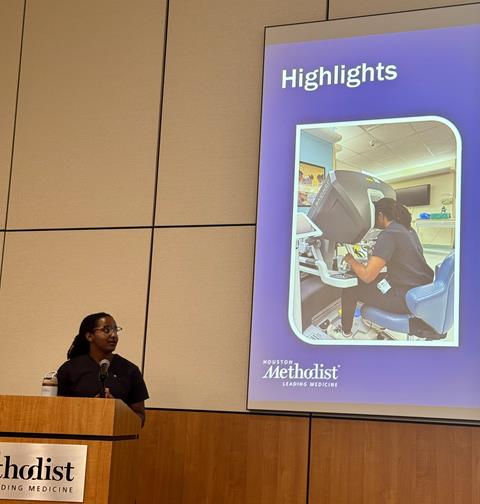
Kayla Bryant presenting at the Fields Rosenberg Fellow Oral Retreat
The Fields Rosenberg Summer Surgical Fellowship is sponsored by Dr. Wade Rosenberg and led by Dr. Jeffrey Friedman. The 10-week program provides students with direct mentorship from surgeons across multiple specialties, including general surgery, neurosurgery, urology, plastic surgery, cardiovascular surgery, and thoracic surgery. Fellows also participate in didactic lectures and career and professional development activities designed to introduce them to careers in medicine and surgery. During her time with the Thoracic Surgery service, Kayla experienced much more than simply observing operations. She spent time with This type of experience is particularly valuable for students considering a career in medicine. Surgery is much more than performing an operation. It begins with listening to patients, understanding their disease, determining the appropriate treatment, and helping patients and their It was a pleasure having Kayla as part of our Thoracic Surgery team this summer. Her enthusiasm, curiosity, and willingness to learn made her a welcome addition to our service. We hope her experience gave her a meaningful glimpse into the rewards and challenges of a career in surgery and further strengthened her interest in medicine. As Kayla prepares to apply to Thank you, Kayla, for spending your summer with us. We were delighted to have you as part of our team, and we look forward to seeing what the future holds for you.
Celebrating the 2026 Houston Methodist General Surgery Graduates
Each year, graduation provides an opportunity to recognize the accomplishments of our residents and to reflect on how much they have grown during their time at Houston Methodist Hospital. This year, we are proud to celebrate the 2026 graduating class of the Houston Methodist General Surgery Residency Program as they complete their training and begin the next chapter of their surgical careers. General surgery residency is a demanding five-year journey. During their training at Houston Methodist, our residents care for patients with a remarkable breadth and complexity of surgical disease while progressively assuming This year’s graduates have distinguished themselves both clinically and academically, and we are especially proud of the outstanding fellowship opportunities they have earned. Farshad Amirkhosravi, MD will pursue a fellowship Robert Brumer, MD, PhD will pursue a fellowship in Acute Care Surgery at Baylor College of Medicine in Houston, TX Steven Elzein, MD will pursue a fellowship in Abdominal Transplant Surgery at Ohio State College of Medicine in Columbus, OH Therese Hoof, MD will pursue a fellowship Rodrigo Jacobucci, MD will pursue a fellowship in Advanced GI/MIS Bariatric at Orlando Health Medical Center in Orlando, FL Andrea Meinders, MD will pursue a fellowship in Abdominal Transplant Surgery at Vanderbilt University Medical Center in Nashville, TN Mahnoor Zia, MD The success of this graduating class reflects not only their individual talent and hard work but also the commitment of our faculty, advanced practice providers, nurses, staff, and fellow residents who have contributed to their education throughout the past five years. For those of us involved in surgical education, there are few things more rewarding than watching residents arrive as interns and gradually develop into confident, independent surgeons. We have watched this class take on increasingly Although we are sad to see them leave Houston Methodist, we are tremendously proud of what they have accomplished and excited to see where their careers will take them. Their fellowship matches are a testament to the quality of their training and their dedication to surgery. Congratulations to the Houston Methodist General Surgery Class of 2026. We are proud to have been part of your surgical training and look forward to watching you become leaders in your respective
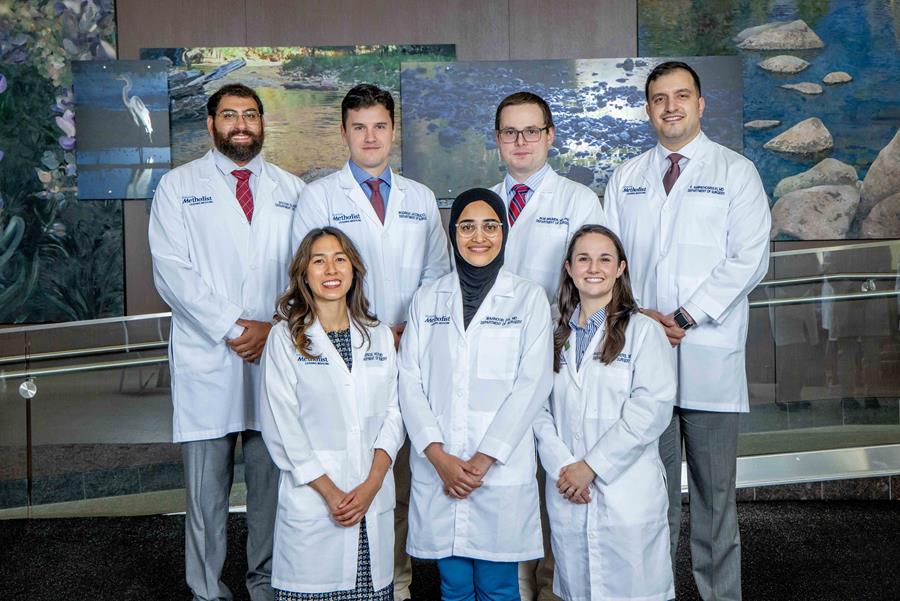
Top Row (left to right): Steven Elzein, Rodrigo Jacobucci, Robert Brumer, Farshad Amirkhosravi
Celebrating the Graduation of Dr. Anuj Shah
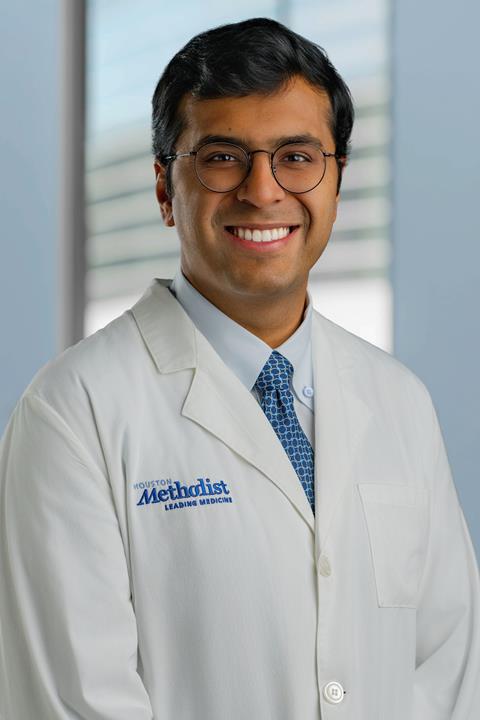
Anuj Shah, MD This year, we have the privilege of celebrating the graduation of Dr. Anuj Shah from our Cardiothoracic Surgery Fellowship at Houston Methodist Hospital. For me, this graduation is particularly meaningful because I have had the opportunity to watch Anuj develop as a surgeon for the past seven years. I first met Anuj when he began his general surgery residency at Houston Methodist after receiving his medical degree from McGovern Medical School at UTHealth Houston. Even early in his residency, he had a strong interest in cardiothoracic surgery. Over the years, that interest developed into a clear passion for the
Anuj became actively involved in thoracic surgery research during his general surgery training, working with me and our team on numerous projects. His work led to presentations at national meetings as well as publications in thoracic surgery journals. More importantly, these projects demonstrated his curiosity, work ethic, and desire to improve the care of our patients. When the time came for Anuj to apply for cardiothoracic surgery fellowship, ranking him highly was an easy decision. We already knew his character, his commitment to our patients, and his potential as a surgeon. We were extremely excited when he matched One of the great privileges of surgical education is having the opportunity to watch a trainee develop over many years. In Anuj’s case, I have been fortunate to see the entire journey—from a general surgery intern learning the fundamentals of patient care and surgery to a confident and fully trained cardiothoracic surgeon prepared to care for some of our most complex patients. Watching that transformation has been tremendously rewarding. Throughout his training, Anuj has demonstrated the qualities we hope to instill in all of our graduates: As Anuj begins the next chapter of his career at Medical City Fort Worth Hospital, his focus will be cardiac surgery. We know that he will bring the same dedication and commitment to excellence that he demonstrated throughout his training to every patient he cares for. We are confident that he will provide outstanding cardiac surgical care and make important contributions to his new practice and community. For those of us who have had the opportunity to participate in his training, his graduation is both a proud and bittersweet moment. It has been wonderful to watch him grow from an intern into a cardiothoracic surgeon, and we are enormously proud to have played a role in that journey. Congratulations, Dr. Shah. We are proud to call you a graduate of the Houston Methodist Cardiothoracic Surgery Fellowship and look forward to watching all that you accomplish in the years ahead.
Investing in the Future of Thoracic Surgery: Our Inaugural Research Fellow
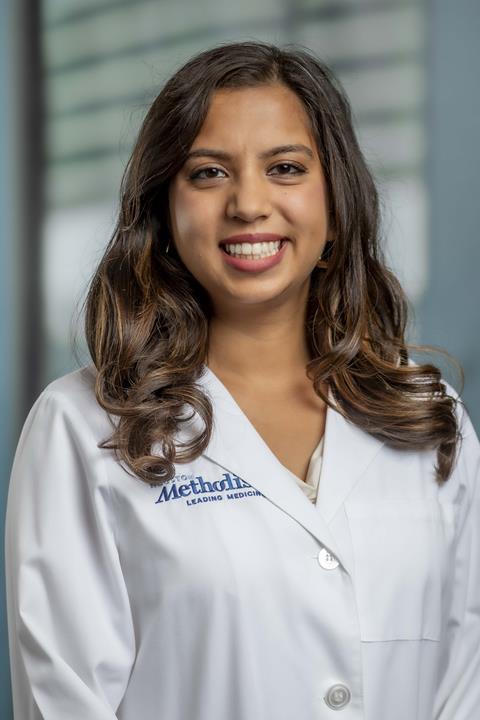
Marisha “Mari” Madhira, MD We are excited to announce the establishment of the Thoracic Surgery Research Fellowship at Houston Methodist, made possible through the generous support of the Underwood Foundation and Dr. Gaber. This new fellowship represents an important investment in the future of thoracic surgery research and in the development of the next generation of surgeon-scientists. We are especially pleased to welcome Dr. Marisha “Mari” Madhira as our inaugural Thoracic Surgery Research Fellow. As the first fellow in this new program, Mari will help establish a foundation for what we hope will become a longstanding tradition of
Mari is currently a general surgery resident at Houston Methodist and brings an impressive research background to this position. She received her medical degree from the University of Kansas School of Medicine, where she also earned a Master of Science in Clinical Research. Her master’s thesis examined the relationship between early antibiotic administration and outcomes in trauma patients and received the departmental award for best thesis. Her commitment to research began well before residency. Mari studied biomedical engineering at Duke University and has participated in research across multiple disciplines, Adding to this accomplishment, Mari has been selected to participate in the Burroughs Wellcome Fund Academy of Physician Scientists. This highly competitive national initiative is designed to strengthen the pipeline of physician-scientists by supporting innovative institutional programs that provide research training and career development for physicians pursuing research-intensive careers. The goals of the Academy align closely with those of our new During her fellowship, Mari will focus on clinical outcomes research designed to better understand how we should manage patients with thoracic surgical diseases. Her projects will examine important questions related to treatment selection, surgical outcomes, and quality of care, with the ultimate goal of using clinical data to improve how we care for our patients. Research is essential to advancing thoracic surgery. Many of the questions we encounter in clinical practice—who benefits most from surgery, which treatment strategy provides the best outcomes, and how we can reduce complications and improve recovery—require careful investigation using high-quality clinical data. Creating an environment in which young surgeons can learn how to ask and answer these questions is an important part of our academic mission. We are extremely grateful to the Underwood Foundation and Dr. Gaber for their support in establishing this fellowship. Their investment has allowed us to create a dedicated opportunity for a promising There is something particularly exciting about welcoming the first fellow of a new program. Mari will not only conduct important research but will also help shape the identity and future direction of the Thoracic Surgery Research Fellowship. We could not have asked for a better inaugural fellow. We are proud to welcome Mari to this new role and look forward to watching her grow as
Innovation in the Treatment of Esophageal Perforation
At a recent Underwood Center Multidisciplinary GI/Surgery Grand Rounds, Dr. Naselsky presented an innovative approach to one of the most challenging emergencies in thoracic surgery: esophageal perforation. Esophageal perforation is a serious and potentially life-threatening condition associated with significant morbidity and mortality. Surgical treatment has traditionally required a large open operation to control contamination and repair the damaged esophagus. Dr. Naselsky presented a 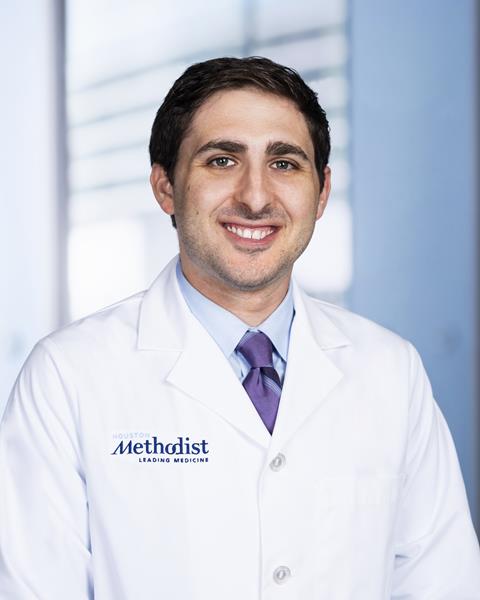
Warren C. Naselsky, MD, MS
This case highlights how innovation and advanced surgical technology can directly improve patient care. Robotic surgery is not simply about using new technology—it is about applying technology thoughtfully to solve difficult clinical problems. Enhanced visualization, precision, and minimally invasive access can allow surgeons to perform complex procedures while potentially reducing the morbidity associated with large open operations. Dr. Naselsky’s presentation also reflects the value of the Underwood Center Multidisciplinary GI/Surgery Grand Rounds, where specialists come together to share challenging Cases such as this demonstrate the future of thoracic surgery: combining surgical expertise with innovative technology to provide safer, more precise, and less invasive treatment for our patients.
Meet our Thoracic Surgery Team
Min P. Kim, MD 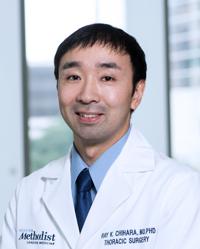
Ray K. Chihara, MD, PhD
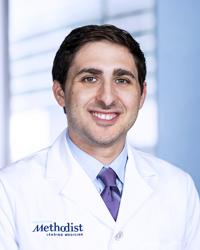
Warren C. Naselsky, MD, MS 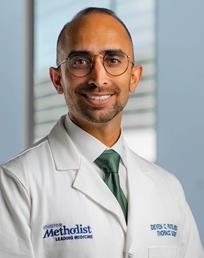
Deven C. Patel, MD, MS
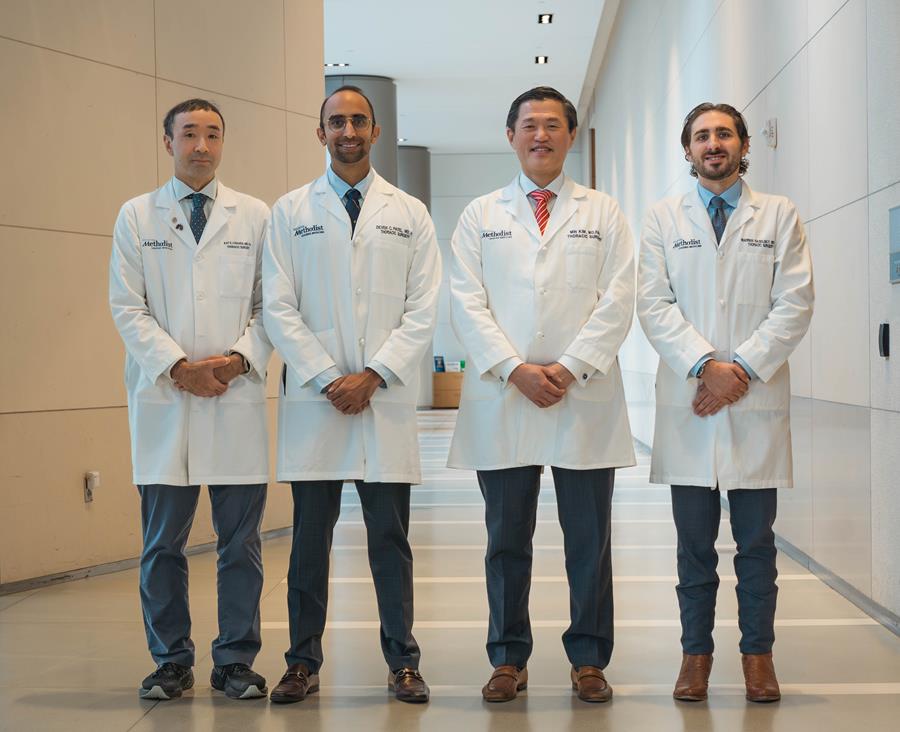
Left to Right: Dr. Ray K. Chihara, Dr. Deven C. Patel, Dr. Min P. Kim, Dr. Warren C. Naselsky
|
